
Traditional Practices
Kendara Creation: How a Traditional Sri Lankan Horoscope Is Made
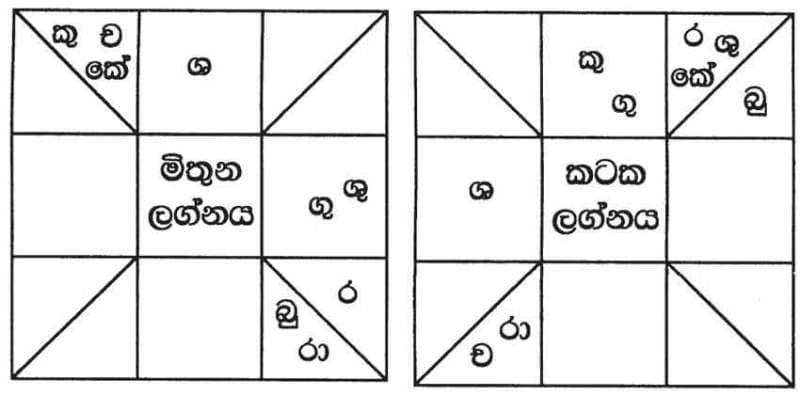
When a mother arrives at my door a few days after her child is born, she is rarely carrying much. Usually just a slip of paper with the date, the exact minute of birth, and the name of the town where it happened. From those three small things I begin to build a kendara (කේන්දර) — the birth chart that will follow that child through school admissions, marriage proposals, career decisions and, one day, the naming of their own children. Over the years I have made thousands of them, and I still treat each one with the same care I was taught as a young man.
A kendara is not a fortune-telling gimmick and it was never meant to be read once and forgotten. In our tradition it is a record — a careful map of where the sun, moon and planets stood at the moment a person first drew breath, drawn so precisely that another astrologer, years later, can pick it up and read the same life from it. That is what I want to explain here: not a mysterious ritual, but the actual craft of how one of these charts comes into being.
What a kendara really is
The word kendara comes from the Sanskrit kundali, and much of what we do shares its roots with the wider tradition of Indian jyotisha. But Sri Lankan practice has quietly grown its own character over the centuries. Our calculations are anchored to the island's own coordinates, our timing tables were worked out for these latitudes, and the whole system has been braided together with Buddhist and older pre-Buddhist practices until it became something distinctly ours. When a family in Kandy or Matara speaks of "getting the kendara done," they mean something a little different from what a family in Chennai means, even though the mathematics behind it is cousin to cousin.
At its heart the chart does three things at once. It fixes the exact planetary positions at birth. It maps those positions onto twelve houses that each govern a part of life. And, read properly, it lets me speak to the karmic patterns a person carries — the tendencies that were shaped long before this life and that will express themselves through it. I say this carefully to every client: the chart shows tendencies and timing, not fixed sentences. A life is still lived by the person living it.
The palm leaf and the iron stylus
Before computers, and still today for charts a family wants to keep, a kendara was inscribed on treated talipot palm leaf — what we call තල්පත් කොළ. There is a reason the old astrologers chose it. A properly prepared palm leaf can hold its writing for centuries; I have handled family charts three and four generations old that are still perfectly legible. It is the same material our Buddhist manuscripts were written on, and it stands up to the heat and damp of the tropics in a way paper never could.
The tools are simple and have not changed much. An iron stylus — the ලෝහ කටුව — is used to scratch the letters and figures into the leaf, and natural inks made from plant and mineral sources are rubbed into the grooves so the writing stands out dark against the pale surface. The leaf itself is cleaned and smoothed before a single mark is made, and the grid of houses is laid out with measuring tools so the geometry is exact.
The making of such a leaf chart was never treated as ordinary paperwork. My teacher would not begin an important kendara without first choosing an auspicious time to sit down to the work, cleaning the space, and settling his own mind with a period of meditation and recitation before touching the stylus. I keep those habits. Whether or not one believes they add anything to the chart, they slow you down and make you careful, and a careless kendara is worse than no kendara at all.
Getting the numbers right
Most of the real work happens before any leaf is touched, in the calculation. The moment of birth has to be translated from ordinary clock time into astronomical time. That means correcting for the local mean time of the birth town rather than the standard national clock, converting to sidereal time so the planetary positions come out true, and applying the ayanamsa correction that accounts for the slow precession of the equinoxes. A minute of birth time, carelessly recorded, can move a house boundary and change a reading — which is why I press mothers so hard on the exact time.
From there I fix the longitude of each of the nine planets — the navagraha — and place them into the houses using the traditional division. Then comes the part that separates a data sheet from a horoscope: judging how strong or weak each planet actually is. Our tradition assesses this through six kinds of strength, together called shadbala. A planet gains or loses power from its position and sign (sthana bala), from the time and season of birth (kala bala), from its own motion, including whether it is retrograde (chesta bala), from its natural inherent brightness (naisargika bala), from the aspects thrown on it by other planets (drik bala), and from a final weighing of its benefic or malefic effect for that particular person (ishta-kashta bala). A planet can sit in a fine house and still be quietly weak; reading the strengths is what tells me which promises in the chart will actually ripen.
The twelve houses
Once the planets are placed, the chart divides a whole life into twelve houses, the dwadasha bhava, each one a room where a different part of living unfolds. The first, the lagna (ලග්න), is the person themselves — body, temperament, the general shape of their fortune and the circumstances of their birth. The second, dhana bhava, speaks of wealth, family, and even speech and food. The third governs siblings, courage, and short journeys; the fourth, the sukha bhava, holds the home, the mother, early education and one's inner peace.
The fifth is the house of children, romance, intelligence and devotion — a house parents always want me to read closely. The sixth carries health, obstacles, enemies and daily work. The seventh, the kalatra bhava, is marriage and partnership, and it is the one families study hardest before a wedding. The eighth speaks of longevity, hidden things and transformation; the ninth, the dharma bhava, of religion, higher learning, long travel and the father. The tenth is career, status and one's standing in the world. The eleventh is gains, friendships and hopes fulfilled. And the twelfth, the vyaya bhava, is the house of loss, expense, foreign lands and, finally, spiritual liberation.
I never read a house in isolation. A strong tenth house means little if its lord is weak or afflicted, and a difficult sixth can be softened by good support elsewhere. The art is in seeing how the rooms of a life speak to one another.
The nakshatra beneath it all
Beneath the signs and houses runs the older layer, the twenty-seven nakshatras — the lunar mansions the moon passes through as it circles the sky. The nakshatra the moon occupies at birth tells me a great deal about a person's inner nature, their talents and their leanings, often more intimately than the sun sign does. It also anchors the dasha system, the great cycles of planetary periods that govern when things happen in a life. When a family asks me the right time for a marriage, a house-warming or the start of a business, I am reading the nakshatra and the running dasha as much as anything else. Timing, in our work, is everything.
Where tradition meets the screen
I will be honest about how I work now. For the raw calculation of planetary positions I use software, because a good ephemeris is faster and more exact than any table I could work by hand, and I would rather my client's chart be right to the minute. But the machine only gives me numbers. It cannot tell a nervous father that his son's difficult period will pass, or judge which of two weak planets deserves a remedy first. That judgement, and the responsibility that comes with it, still belongs to a human being who has sat with many charts and many lives.
For a chart prepared in 2026, the input record matters as much as the software. I ask for the birth date, the clock time exactly as recorded, and the town or hospital of birth. For births abroad, the country and time zone are essential, and historical daylight-saving rules may need checking. Parents should not silently “correct” a time from memory. If the recorded time is approximate, the report should say so because even excellent software cannot recover precision that was never documented.
So I keep both. The calculation is digital; the reading, the counsel, and — when a family asks for it — the hand-inscribed leaf chart to keep as an heirloom, remain as they always were. An honest astrologer owes his client the truth of the chart, gently told, without false promises and without frightening them. And the client owes the astrologer an exact birth time and an open mind. When both hold up their end, a kendara does what it has always done: it lets a person see the shape of their own life a little more clearly, and walk it with more awareness.
If you would like a kendara prepared for yourself or your child — calculated precisely and read with care — use our horoscope-creation service. Bring the date, recorded time, and town of birth.
Ready for your personal reading?
Get an authentic Sri Lankan astrology reading prepared by expert astrologers — wherever you are in the world.
Explore our servicesLearn how we prepare and review our articles in the editorial policy.
Related Articles
Auspicious Times to Travel and Visit Temples in Sri Lanka
A Sri Lankan astrologer on choosing an auspicious nakath to begin a journey, and how to plan a calm, unhurried temple pilgrimage across the island.

How We Brought Sinhala Astrology Readings Into the Digital Age
How Suhada Astrology records a reading in Sinhala, transcribes and translates it with AI, and delivers a written horoscope report in Sinhala and English.

Upan Welawata Namata Akuru: Auspicious Letters for Baby Names in Sri Lanka
A complete guide for Sri Lankan parents on finding 'upan welawata namata akuru' (auspicious letters for baby names) based on birth time astrology. Learn why it matters and how to get the correct nakath letters from a trusted astrologer, even when living abroad.