
Historical Astrology
The Ancient Wisdom of Sri Lankan Astrology: From King Ravana to Modern Times
When people ask me how old our astrology really is, I never quite know where to begin. The honest answer is that it is older than any record I can point to, older than the palm leaves I still hold in my own hands. What we call jyothishaya in this island did not arrive fully formed. It grew, slowly, out of the sky-watching of people who lived here long before us, and it has been shaped since by everything that has passed over Lanka — kings, monks, Vedic scholars, and the quiet astrologers of a thousand village temples whose names nobody wrote down.
I have practised long enough to feel that lineage sitting behind me when I sit down to prepare a horoscope. I am not inventing anything. I am carrying something forward, the way it was carried to me.
Before the Robes Came
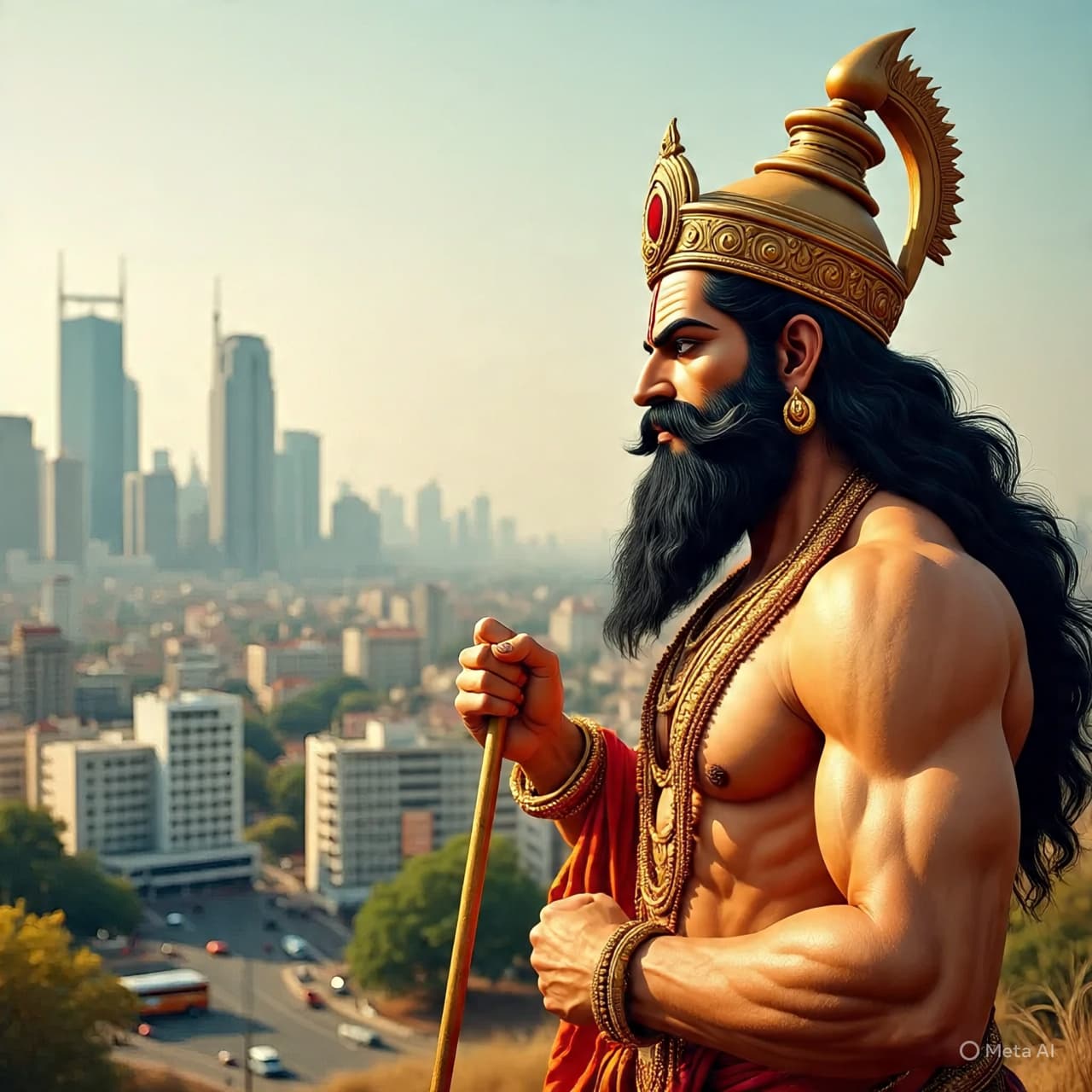
There is a temptation, when we speak of our traditions, to imagine that everything began with Buddhism. It did not. Our tradition holds that this island possessed astronomical and astrological knowledge long before the Buddhist teaching reached our shores in the third century before the common era. The old stories place that knowledge in a golden age, and at the centre of that golden age they place one name above all others — Ravana.
I want to be careful here, because Ravana belongs to epic and living tradition, not to a continuous historical record that proves the astrological claims made about him. In the Ramayana he is cast as the antagonist, while some Sri Lankan traditions remember him very differently — as a scholar-king associated with medicine, astronomy, and jyothishaya. I present that as cultural memory rather than settled history. The stories connect his court with the reading of the nakshatras, the assessment of planetary strength, and the choosing of auspicious moments. The reverence itself is historically important, but it should not be mistaken for archaeological proof that today's porondam or kendara methods came directly from one ancient court.
What Buddhism Gave Us
When the Buddhist teaching took root here, it did not sweep the older astrology away. That is the important thing to understand, and it is the thing outsiders most often miss. The Dhamma refined our practice rather than replacing it, and in doing so it gave Sinhala astrology a temperament you do not find everywhere.
The heart of it is this. We read the planets as signs of karma — of tendencies a person carries from the past — but we do not read them as a sentence handed down that cannot be appealed. A chart shows the weather a soul is walking into. It does not chain the walker. I have sat with clients who arrived frightened by some difficult period in their horoscope, and my task, as I understand it, is never to frighten them further. It is to show them the ground honestly and remind them that merit, meditation, and right action still belong to them. That is the Middle Path applied to a horoscope: neither pretending the planets say nothing, nor pretending they say everything.
This is why, in our tradition, the highest remedy is rarely a ritual object. It is compassionate conduct. A person who lives well can soften a great deal that the chart appears to threaten.
The Making of a Kendara
The kendara — the birth chart — is where all of this becomes practical. For centuries these charts were inscribed onto talipot palm leaves with an iron stylus, and I still keep leaves prepared in the old way. There is a reason the practice survives beyond mere sentiment. A palm leaf, properly cured, outlives the person whose life it records; families bring me leaves their grandparents were given. And the slowness of inscribing by hand imposes a discipline. When a single error cannot simply be deleted, you learn to calculate carefully the first time. I do not think that patience can be entirely replaced by software, however good the software becomes.
Our calculations also carry marks of this particular land. We read the chart for a tropical island, mindful of our latitude and the rhythm of the monsoon, and we weave in the festivals and seasons by which ordinary life is actually lived here. These are not exotic flourishes; they are simply what it means to read a sky as it appears over Lanka rather than somewhere else.
Porondam, and Why We Trust It
If there is one part of our tradition I am asked about more than any other, it is porondam — the matching of two horoscopes before a marriage. In our society marriage has never been treated as a private arrangement between two individuals alone; it joins families, and it is meant to last a lifetime. So we look closely.
The classical system weighs twenty distinct points, the visi porondam, each measuring a different kind of harmony between two people. A few of the ones I lean on most:
- Nakath porondam — whether two minds and their aims move together
- Gana porondam — temperament, and whether two natures soothe or grate against each other
- Mahendra porondam — the welfare of children and the prosperity of the home
- Sthree deerga porondam — the long endurance and contentment of the marriage
- Yoni porondam — physical and intimate compatibility
Over many years of practice, I have seen how porondam gently reveals truths that couples only discover much later through experience. I do not present it as a verdict of fate. I present it as a mirror held up early, while there is still time to understand each other clearly. When a match is strong, I say so plainly. When it is not, I do not condemn it; I explain where the friction is likely to sit, so that two people can walk in with open eyes rather than closed ones.
The families I serve now are not the families of a hundred years ago. Many are dual-income, some are spread across other countries, some are marrying across communities they would never have met a generation back. I read for the couple in front of me, in the life they actually live — but the twenty points themselves I do not alter, because it is not my place to.
Where the Tradition Lives Now
Astrology is not something Sri Lankans keep for special occasions; it runs quietly through ordinary days. At Sinhala Aluth Avurudda, the whole country pauses for the nakath — the auspicious moments for lighting the hearth, for the first meal, for beginning work, each with its own recommended direction and colour for the year. Beyond the New Year, we mark births with naming ceremonies timed to the birth nakshatra, we weigh planetary periods when choosing a path in study or work, and we look to the chart when deciding the timing of a marriage. None of this is treated as superstition in our homes; it is simply how many families order their lives.
Today much of my work reaches people through a screen, and I have made my peace with that. A well-built online service can run the same calculations my teachers ran by hand, deliver a clear report, and let a family in another timezone sit with me over a video call. What technology cannot supply is the judgement — the reading of context, the ethical care, the years spent learning from older astrologers — that turns a table of positions into genuine guidance. When a decision is heavy, a person deserves a person, not only a page of output.
That, in the end, is what I hope you take from this long inheritance. From the legend of Ravana down to the leaf I inscribe today, Sinhala astrology has kept a rare balance: it takes the sky seriously, and it takes your freedom seriously too. We are shaped by what moves above us, and we are still the ones who choose how to answer it.
If you would like a horoscope prepared or a porondam match read with that same care, I would be glad to help — you can see the work I offer on my services page.
Frequently Asked Questions
What is the role of King Ravana in Sri Lankan astrology?
In our tradition, Ravana is remembered as a scholar-king and a master of jyothishaya, and the stories credit his court astrologers with refining early methods behind kendara and porondam work. This is inherited legend rather than documented history, and I share it as tradition, not as proven fact.
How should porondam matching be used in a modern relationship?
Porondam weighs twenty traditional points of harmony between two horoscopes. It can structure a conversation about temperament, family expectations, and possible areas of tension, but it is not a scientifically validated predictor of marital success. A couple should also discuss consent, communication, finances, health, children, faith, and safety directly; when needed, qualified counselling or medical advice matters more than a score.
Can Buddhist teachings influence astrological predictions?
Yes. We read the planets as signs of karmic tendency rather than unchangeable destiny. Meditation, merit, and compassionate conduct are understood to soften difficult planetary periods, which is why our guidance is never fatalistic.
Ready for your personal reading?
Get an authentic Sri Lankan astrology reading prepared by expert astrologers — wherever you are in the world.
Explore our servicesLearn how we prepare and review our articles in the editorial policy.
Related Articles
Buddhist and Hindu Astrology: The Sri Lankan Synthesis
A Sri Lankan astrologer on how our jyothishaya blends Vedic technique with Buddhist thought on karma, free will, and compassionate guidance.
Auspicious Times to Travel and Visit Temples in Sri Lanka
A Sri Lankan astrologer on choosing an auspicious nakath to begin a journey, and how to plan a calm, unhurried temple pilgrimage across the island.

How We Brought Sinhala Astrology Readings Into the Digital Age
How Suhada Astrology records a reading in Sinhala, transcribes and translates it with AI, and delivers a written horoscope report in Sinhala and English.