
Cultural Practices
Nakath: How We Choose Auspicious Times in Sri Lankan Life
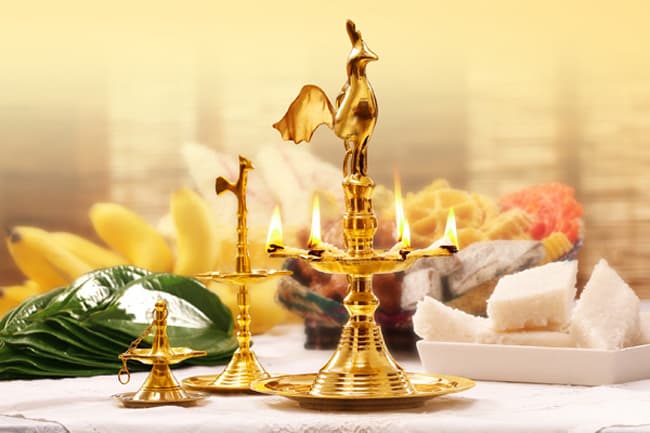
When a family in my village prepares for a wedding, the first person they visit is not the tailor or the caterer. They come to me, kendara in hand, and ask a single quiet question: "When is the good time?" That question is the heart of what we call nakath (නැකත්) — the practice of choosing an auspicious moment before we begin anything that matters. Over the years I have watched grandmothers, engineers, and young couples fresh from abroad all ask it in exactly the same way, because in Sri Lankan life the when of an act is treated as seriously as the act itself.
I have come to think of nakath less as a rule imposed from above and more as a way of showing respect — to the moment, to the family, and to the unseen rhythms we live inside. A wedding, a first ploughing, the lighting of the first hearth in a new house: these are not merely tasks to be completed. They are thresholds. Nakath is how we cross them with care.
What Nakath Really Means
People sometimes assume nakath is only about avoiding bad luck. In my experience it is closer to the opposite: it is about entering good work at the moment when the effort has the best chance of flowering. In our tradition, time is not a flat line where one hour is the same as the next. Some moments carry a settled, generous quality; others feel unsettled, better left for rest than for beginnings. A farmer who has worked the land for decades knows this in his body — he will tell you certain mornings simply feel right for sowing. Nakath is the astrologer's more precise version of that same instinct, worked out through the movement of the moon, the sun, and the planets rather than through feeling alone.
The word itself points to the stars. Nakath comes from the same root as nakshatra, the lunar mansions, and the moon's passage through them is one of the main things I watch. This is the astronomy behind jyothishaya — the science of light — applied not to a person's whole life, as a birth chart is, but to a single upcoming action. A horoscope asks who is this child? Nakath asks is this the right hour to begin?
How I Choose an Auspicious Time
When a family asks me for a nakath, I am not picking a number out of the air. I work through the traditional panchanga, the five-limbed reckoning of the day, and weigh each part against the kind of activity they have in mind.
The first limb is the tithi, the lunar day set by the changing angle between the sun and the moon across the two fortnights of waxing and waning light. Some tithis favour beginnings and some are best avoided. Then there is the vara, the weekday, each ruled by a planet whose temperament colours the day. After that I look most closely at the nakshatra — which of the twenty-seven lunar mansions the moon occupies, because certain stars suit certain works and others do not. Two further factors complete the picture: the yoga, formed by particular sun-and-moon combinations, and the karana, a half-tithi that lets me narrow the timing down finely. Only when these agree do I feel confident marking an hour.
Alongside these, I keep an eye on where the planets sit — favouring the benefics for gentle, prosperous undertakings and stepping around the harsher influences for anything delicate. I also weigh the moment against the family's own charts, because a time that is broadly good may still clash with a particular person's birth star. This is why I always ask for birth details before finalising a wedding nakath. A good moment for the world is not automatically the good moment for this bride and this groom.
The Occasions Families Bring to Me
Weddings are the most common reason people seek nakath, and rightly so. I am asked to fix not only the moment the couple exchange the wedding — the poruwa ceremony — but the smaller thresholds around it: the timing of the homecoming to the new household, and the first meal shared under a shared roof. Families feel, and I agree, that a marriage begun at a settled hour starts on gentler ground.
Almost as often, people come about a house. When a family moves into a new home, we choose a time for the first entry and for the lighting of the hearth, so that the house is warmed into life at a moment of promise rather than by accident. I have sat with families the evening before a house-warming, watching them arrange lamps and sweets, waiting together for the hour to arrive. There is a real quietness in that waiting that I have never found any modern calendar able to replace.
Beyond weddings and homes, nakath threads through the whole shape of a life. Farmers still ask about the first ploughing and the sowing, keeping to the older bond between the land and the moon. Parents come for the naming of a newborn, for the child's first taste of solid food, and for the first letters written on a tray of rice — the beginning of learning. Shopkeepers ask me to bless the opening of a new business and the first sale. Even a long journey or an important signing is, for many, worth timing well. This is especially true of a pilgrimage: I have written separately about choosing an auspicious time to travel and visit the island's temples, where the calm we begin with matters as much as the shrine we reach — for families returning from abroad, keeping the day in the hands of a trusted private driver in Sri Lanka is often what lets the departure happen at the exact hour I have marked. None of this is anxiety. It is a habit of pausing to begin properly.
If I had to name the single grandest expression of nakath, it would be the Sinhala and Tamil New Year in April. In those days almost nothing is left to chance. There is a precise time to stop the old year's work, an interim period of rest — the nonagathe — when we cook nothing and start nothing, and then a whole sequence of auspicious moments: the lighting of the hearth, the first cooking of milk-rice, the exchange of the first meal, the giving and receiving of money to begin the year's dealings, each often to be done facing a particular direction. For one long morning, an entire nation moves to the same astrological clock. I know of nothing else quite like it.
Nakath in a Fast-Moving World
I will not pretend the modern week makes this easy. Office hours, flights, and international deadlines rarely bend to the moon, and families abroad often cannot gather at the ideal hour. My honest advice is the same one I give in my own home: keep the spirit even when the letter is hard. If the perfect moment falls at three in the morning on a working Tuesday, we look together for the best time that is genuinely possible, and I would rather a family observe a slightly lesser nakath with full attention than chase a flawless one they cannot honour. The aim was never rigidity. It was mindfulness about beginnings.
In 2026, many families coordinate one ceremony across Sri Lanka, Europe, Australia, North America, and the Middle East. The chosen time should therefore be written with the calendar date, local clock time, place, and time zone. A bare instruction such as “7:12 in the morning” can be misunderstood when relatives join online or when the event is abroad. Daylight-saving rules must be checked for the event location rather than copied from Colombo time.
That, in the end, is what I hope people take from nakath. It is not superstition, and it is not about fear. It is a very old way of saying that how we begin something shapes how it unfolds, and that a few moments of care before a wedding, a move, or a new venture are never wasted.
If you are approaching one of these thresholds, use the relevant service: general auspicious timing, wedding nakath, or house-warming nakath. Bring the exact birth date, recorded time, and place for everyone whose chart matters to the event.
Ready for your personal reading?
Get an authentic Sri Lankan astrology reading prepared by expert astrologers — wherever you are in the world.
Explore our servicesLearn how we prepare and review our articles in the editorial policy.
Related Articles
Auspicious Times to Travel and Visit Temples in Sri Lanka
A Sri Lankan astrologer on choosing an auspicious nakath to begin a journey, and how to plan a calm, unhurried temple pilgrimage across the island.

Upan Welawata Namata Akuru: Auspicious Letters for Baby Names in Sri Lanka
A complete guide for Sri Lankan parents on finding 'upan welawata namata akuru' (auspicious letters for baby names) based on birth time astrology. Learn why it matters and how to get the correct nakath letters from a trusted astrologer, even when living abroad.
Sri Lankan Baby Names for Parents Abroad: Choosing a Name with Meaning and Tradition
A complete guide for Sri Lankan parents living abroad on choosing meaningful, culturally rooted baby names based on tradition and astrology, with access to trusted services from Sri Lanka.